

Our ultimate goal at GP has always been to build a business where we don’t just brew beer, but also look after our employees, engage with the community, throw our support behind people trying to do cool things, and minimise our environmental impact.
We like to view sustainability at Garage Project as three pillars - Community, People, and the Environment.

Community Support
We provide ongoing support for a wide range of local causes and organisations, both in NZ and Australia. We’re proud to have longstanding relationships with Deaf Aotearoa, Kaibosh Food Rescue, SPCA, Sustainable Business Network, the NZ Fringe Festival, Richter City Rebels, the Tokomanawa Queens (that's our team!), and many more.
This support is provided through a range of avenues: donations, fundraising kegs, collaboration brews, or direct volunteering from our team.

Our People
Garage Project is a team effort. We have a range of initiatives to support the well-being of our crew and the sustainability of our team.
We’re immensely proud to have achieved accreditation as a Living Wage employer at the end of 2019, helping to ensure economic sustainability for our crew.
We’re proud to have taken the PridePledge, and every new crew member completes Rainbow Awareness Training to improve our collective understanding of rainbow communities, helping to keep our spaces safe for everyone.
Garage Project supports active transport through the WorkRide salary sacrifice scheme for the purchase of a bike or scooter, saving crew up to 63% per bike / scooter.
Environmental
The brewing industry has a significant impact on the environment for several reasons: as a manufacturing process it requires considerable use of natural resources like water and energy; the transport of raw materials and finished goods presents a challenge for finding efficiencies and opportunities to reduce the carbon footprint; waste is produced throughout the brewing process and at the end of our product’s use.
Early on, we recognised the importance of doing business in a sustainable way. In 2016, we appointed our first Sustainability Officer to help our team bring ‘green ideas’ to life and to help the whole team keep sustainability central to our processes and outputs. Sustainability is now a part of our culture and the way we work, and we’re a proud member of the Sustainable Business Network.
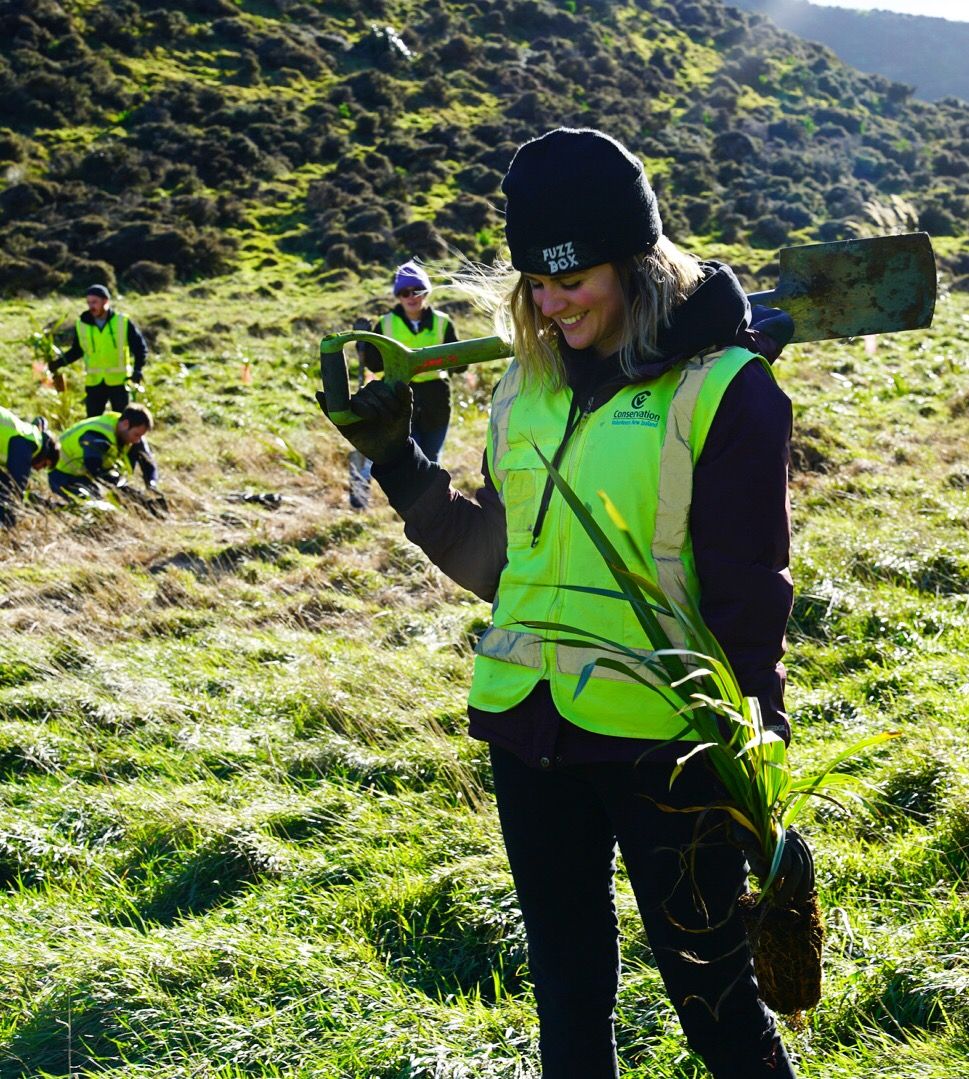
Reforestation - one tree at a time
GP crew take part in annual tree planting days, a tradition started in 2018. We get out of the city and get our hands dirty working with Conservation Volunteers NZ in different areas. The GP crew have planted 3464 trees to date!
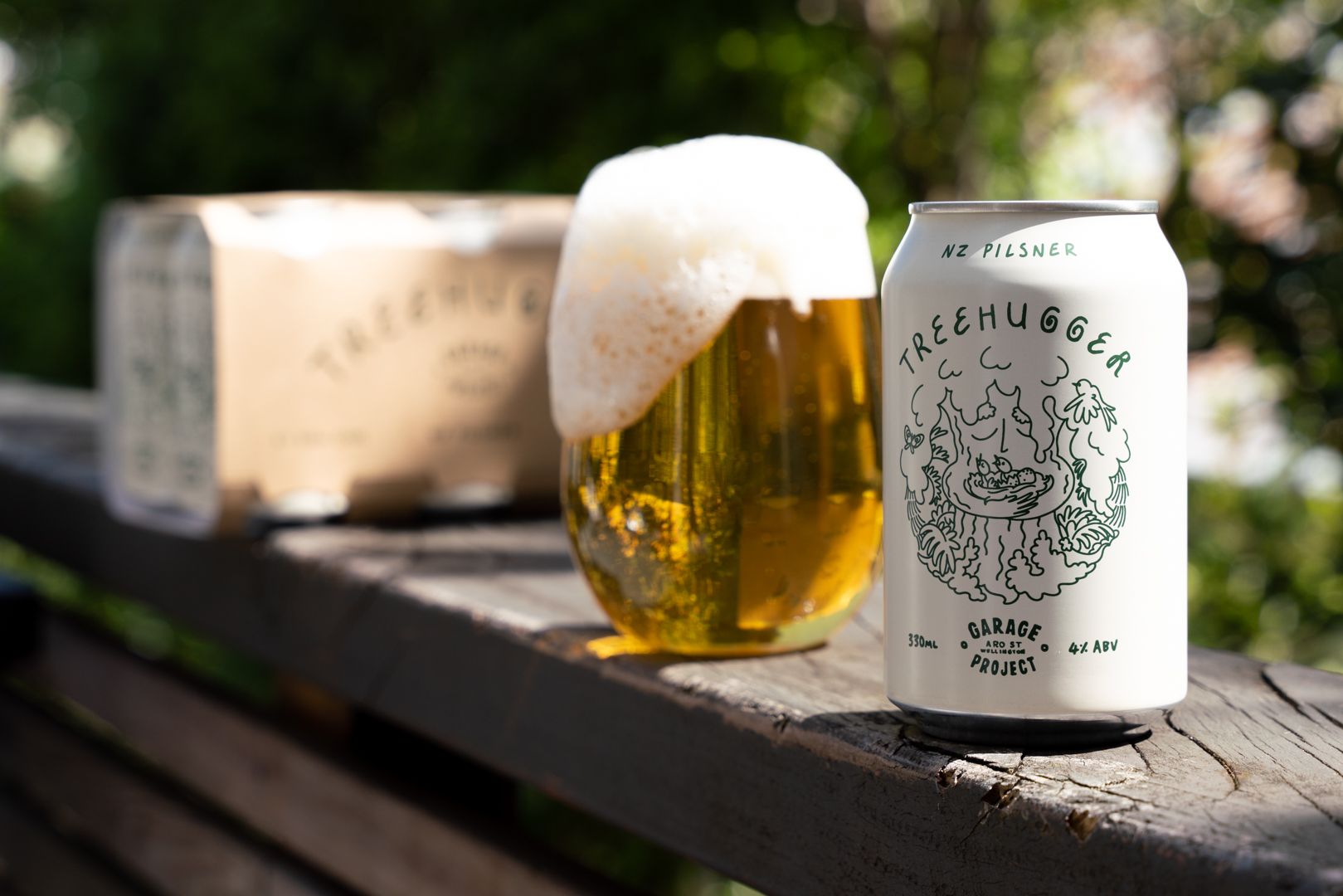
Treehugger Pilsner, while it was in production, built on this by contributing $1 per 6-pack to support tree planting in Canterbury. Treehugger donations funded 8000 plants, including 1000 Kahiketea trees, plus tree guards for protection. These were grown by Trees for Canterbury nursery, and planted by (and now being cared for) Styx Living Lab Trust in the Pūharakekenui / Styx River Catchment, just north of Christchurch City.
- Kahiketea will reach maturity at 750 years, providing seed and fruit to feed birdlife, while regenerating wetlands - pretty cool.
During its production, 10% of profits from our Dirty Water seltzer funded Million Metres Streams planting projects.
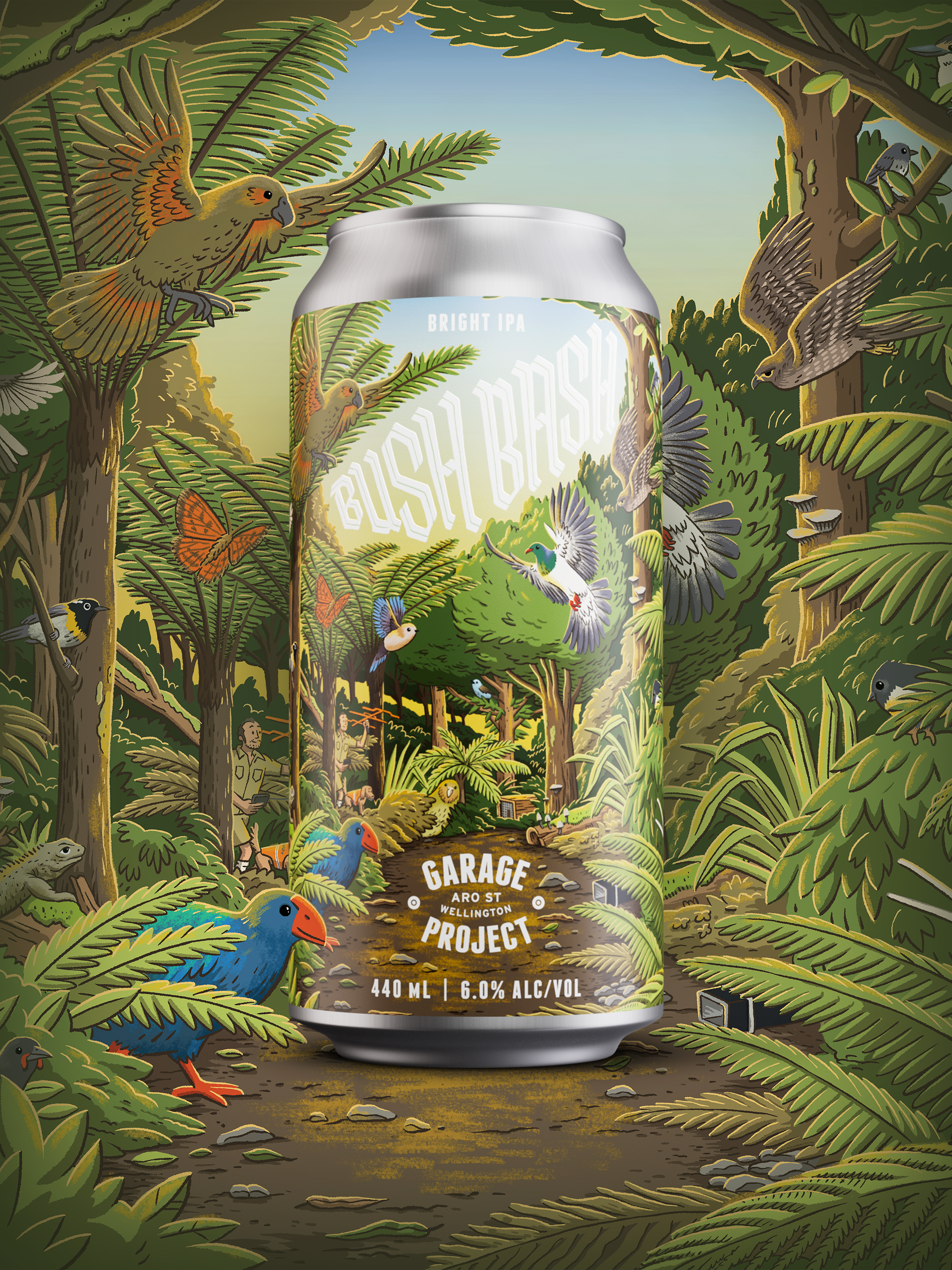
Bush Bash, a 2026 collaboration with Yakima Chief Hops in October 2026, was brewed in support of Maungatautari Sanctuary. $2 from every can goes straight to the sanctuary and the protection of our native environment.
The Treehugger effect: lasting changes to how we do things
A 2022 release, Treehugger, inspired a range of improvements which stuck beyond that one beer. As a result of the work around Treehugger:
- We now rail freight the bulk of our malt from Canterbury to our brewing sites. Rail freight emits 74% less emissions compared to road freight.
- All our boxes and multipacks are made from FSC certified paper and cardboard, ensuring it is sustainably sourced from traceable and renewable sources.
A Net Zero Carbon business
Through Ekos, Garage Project has achieved Net Zero Carbon Business Operations Certification for years 2019 to 2026. This means Garage Project’s carbon emissions from business operations are 100% offset through the purchase of certified carbon credits.For 2026, 100% of our emissions were offset by supporting the Zonguldak Landfill Gas to Electricity Project in Turkey (through Verified Emissions Reductions).
Through Ekos, we couple our carbon offsets with biodiversity credits that support the Maungatautari Sanctuary Mountain conservation project in the Waikato.
Our measurement is done to ISO 14064-1:2018 Greenhouse gases – Part 1: Specification, with guidance at the organisational level for quantification, and independently verified.
Our goal: halve our emissions by 2032
In 2023, we reset our emissions baseline and set new targets. Our goal now is to halve emissions per litre by 2032, from our 2023 baseline.
Key achievements so far:
We’ve reduced Aro St brewery landfill waste by 80%.
- Our spent grain is diverted for animal feed, we recycle bulk grain bags, and we almost entirely use returnable pallets.
- We have e-waste, shrink wrap, and food waste bins divert more from landfill.
- Aluminium cans in Wellington are diverted to Cans for Kai to raise money for food rescue.
- In 2025, we built a new system to divert waste yeast and hops for composting, avoiding landfill. Read more about our sludge tank here.
We’ve reduced Aro St brewery energy per litre of beer by 17.5%.
- We converted to 100% LED lighting.
- We improved tank insulation and refrigeration efficiency.
- Clean hot water is recaptured for reuse in the brewing process.
- And some gains came through boring old engagement and process improvement.
Aro St used to need 9.4 litres of water to make 1 litre of beer, but now only needs 6.4 litres of water per litre, a 30% improvement.
- Recapturing hot water for reuse in the brewery
- Diverting tank sludge to a holding tank, reducing floor washing
- Continually fine tuning brewing and packaging processes
Together, these have reduced Aro St brewing emissions (which comprise of energy, CO2, water) by 12.5% since 2023.
Efforts beyond Aro St:
- Our sales fleet has almost entirely been converted from petrol to hybrids.
- In 2022, we built our cold storage / distribution hub with cutting edge CO2 refrigeration. Compared to a standard system, this is 20% more energy efficient and uses refrigeration gas thousands of times less harmful to the climate. We plan to phase out highly impactful synthetic refrigeration systems, replacing them with natural refrigerant options.
- In 2025, we acquired our flagship Wellington venue - 7 Leeds St. We plan to steadily decarbonise this site. In 2026, we’re replacing the indoor gas heating with efficient heat pumps.
- At our Aro St cellar door and GP Leeds St, we’ve converted the beer pumps used to dispense beer through our taps from CO2 gas to compressed air.
There’s still plenty of work to do
We’ve made a bunch of positive improvements, but there are still some key areas that are proving very hard to decarbonise.
- CO2 gas (used for displacing air in tanks and packaging, and for carbonating beer) remains a tough nut to crack in our Aro St brewery.
- The bulk of our distribution is still achieved by road freight.
- We’re looking closely at how we use air travel and air freight.
- While we’ve made steady gains at our Aro St site, 87% of our measured emissions are from external sources; created outside of our owned spaces but in service to our beers. These are energy intensive and tricky to improve, and they’re increasing - therefore, our total emissions are too. We need to keep working closely with all of our partners to make gains here.
- Bringing more of our wider supply chain in-house, such as out-sourced production and warehousing, gives us more control and oversight to make improvements.
All of our efforts are part of a long journey, one that is not just important, but necessary. Not everything we try is going to be successful, but it’s worth it for the moments where we make a difference - and we’ll keep trying for those.
Appendices
Garage Project’s emission and offset summaries are available here: